Introduction
Ask ten different people how long a box of gloves lasts, and the answers will be all over the place. Some think they last forever. Others quietly keep using old stock because it “still looks fine.” The truth is simple and non‑negotiable. Yes, nitrile gloves expire, and once they do, protection is no longer guaranteed.
When nitrile gloves expire, the synthetic rubber they are made from slowly loses the properties that matter most. Strength drops, elasticity fades, and tiny pathways can open in the material. In a hospital, a food plant, a hair salon, a factory, or even a home kitchen, that can mean direct contact with blood, chemicals, or food‑borne germs without anyone noticing.
This guide explains how and when nitrile gloves expire, what the dates on the box really mean, and how storage can speed up or slow down that clock. It also shows how to spot degraded gloves and where expired stock is never acceptable. Throughout the article, Nitrile Gloves Info shares practical, field‑tested advice so professionals and consumers can manage glove stock with confidence instead of guesswork.
By the end, you will know:
How long unopened boxes usually last
How to store them so they reach full shelf life
How to decide if a specific glove should be used or tossed
With that in hand, you can keep your hands, staff, and customers safer even as older boxes reach their printed expiration date.
Do Nitrile Gloves Expire? Understanding Shelf Life And What The Dates Mean

Nitrile gloves absolutely do expire. They do not rot like food or grow mold inside the box, but the nitrile butadiene rubber (often called NBR) slowly changes with time. Heat, oxygen, humidity, and light all act on the glove material and break some of its internal bonds.
When that happens, three core properties start to fade:
Strength drops, so the glove tears more easily.
Elasticity fades, so it no longer stretches and snaps back the way a fresh glove does.
Barrier tightness decreases at a microscopic level, which weakens protection against liquids, oils, and tiny particles.
Once these changes start, you cannot see every weakness with the naked eye, but the barrier can no longer be trusted.
In the United States, the FDA does not force every disposable glove to carry an expiration date. Even so, most serious manufacturers print one because it serves as a clear quality promise. That date is based on stability testing under good storage conditions. It tells you how long the gloves should perform to specification if they stay in their sealed box and are stored correctly.
For most products, unopened nitrile gloves last about three to five years from the manufacturing date. Some premium medical or industrial lines, made with carefully balanced NBR formulas, can stay reliable for close to ten years when they are kept cool, dry, and dark. On the other hand, poor storage can make nitrile gloves expire much sooner than the date on the box.
Compared to other disposable glove materials, nitrile holds up very well over time. This is one reason many facilities standardize on nitrile gloves for both daily use and emergency stockpiles.
| Glove Type | Average Shelf Life | Key Weakness |
|---|---|---|
| Nitrile | 3–5 years, up to 10 in ideal storage | Sensitive to UV light, heat, and ozone |
| Latex | Up to 3 years | Natural rubber; strong allergy risk and faster aging |
| Vinyl | Around 5 years | Lower puncture resistance and overall durability |
Understanding these ranges helps procurement staff plan purchasing cycles and avoid long‑forgotten pallets that quietly sit until nitrile gloves expire on the shelf.
“Shelf life is not a guess; it’s a tested window of performance. After that window closes, you’re gambling with protection.”
Why The NBR Material Makes Nitrile Last Longer
Nitrile gloves last longer than many alternatives because of the NBR material at their core. NBR is a synthetic copolymer, which means chemists design and adjust its structure on purpose rather than relying on natural rubber from plants. That design control allows a better balance between flexibility and stability over time.
One part of the NBR chain gives the glove its stretch and comfort, while another part delivers oil and chemical resistance. With the right additives, this structure resists oxygen and light better than natural latex does. The result is a glove that keeps its strength and elasticity for more years when it is stored well.
Higher‑grade nitrile gloves also use stabilizers that slow down aging under heat and humidity. Nitrile Gloves Info often advises safety managers to look at standards and certifications as clues that a manufacturer invested in this kind of quality. When you understand why the material behaves the way it does, it becomes much easier to buy, store, and rotate stock before nitrile gloves expire.
Key Factors That Determine How Long Nitrile Gloves Last
If you buy gloves in bulk for a hospital, food plant, salon group, or industrial site, knowing that nitrile gloves expire is only step one. The next step is learning what speeds that process up or slows it down. Four main factors control real‑world shelf life, even when two boxes carry the same printed date:
Material quality and formulation
Packaging integrity
Storage conditions
Usage and handling practices
The most important pieces are the quality of the nitrile itself, how well the packaging stays sealed, the storage conditions, and how the gloves are handled on the way to and inside your facility. By managing these factors, you stretch the useful life of every case and waste less stock when nitrile gloves expire.
As one safety coordinator put it, “Good PPE is important, but good PPE management is what keeps people safe shift after shift.”
Material Quality And Formulation
The shelf life ceiling is set the day the glove is made. High‑quality NBR with well‑chosen additives stands up better to time, temperature swings, and humidity. Cheaper blends may feel fine when new but can start to stiffen or crack much earlier in storage.
Medical‑grade and certified food‑grade gloves often go through tighter testing, which signals more stable materials. When Nitrile Gloves Info explains glove labels, we highlight these approvals as simple clues that the nitrile is likely to age more slowly, giving you more time before nitrile gloves expire in storage.
Packaging Integrity
The box and inner packaging are the first shield against damage. A sealed carton keeps out light, moisture, dust, and air movement that would otherwise reach the glove surface and speed up aging. As long as the box stays closed and undamaged, the gloves age much more slowly.
Once the seal is broken, the clock moves faster. Opened boxes should not sit on a sunny shelf or an open cart. If they do, you may find that nitrile gloves expire in practice long before the printed date. When Nitrile Gloves Info trains teams on storage, we often suggest keeping opened boxes in closed cabinets or secondary containers that limit exposure.
Usage And Handling Practices
How people handle gloves also affects how long they remain safe to use. Stretching a glove too far when pulling it on, dragging fingertips across rough surfaces, or dousing the glove in harsh solvents can damage the material even when it is still “in date.”
From a shelf life point of view, this means that gloves stored in areas where people often grab and drop boxes, crush them under heavy items, or leave them near splashes will start to fail earlier. Good handling habits, including gentle donning and strict single‑use practice, keep each glove closer to the performance the manufacturer intended up to the point when nitrile gloves expire based on time.
How To Store Nitrile Gloves To Maximize Shelf Life
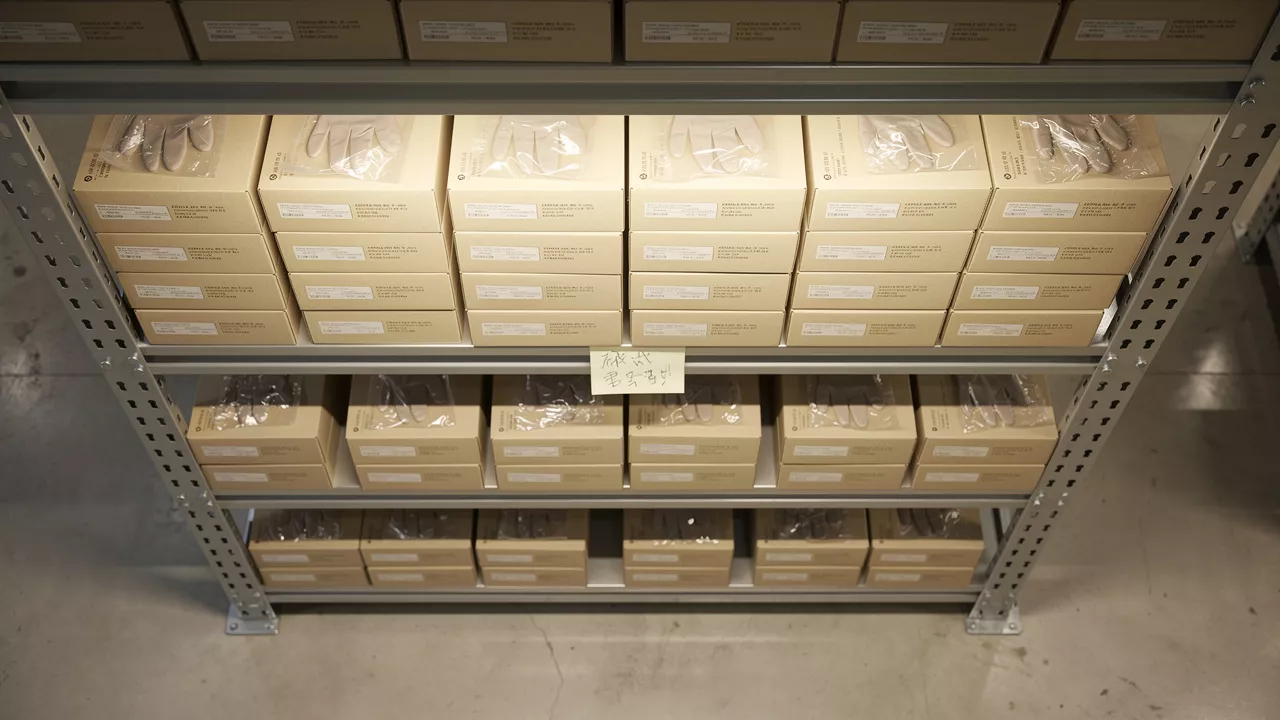
Storage is the one factor you fully control after buying gloves. The right storage plan can let a good product reach the long end of its shelf life range. Poor storage can make brand new nitrile gloves expire in a fraction of that time, even though the box still looks tidy.
For any medical, food, salon, or industrial site, Nitrile Gloves Info recommends treating glove storage the same way you would treat storage for sensitive medicines or test kits. The details are simple, but they must be followed every day, not just during an inspection.
Ideal Temperature, Light, And Moisture Conditions
Nitrile does best in a cool, stable environment. Aim for a storage temperature between about 50°F and 90°F. That means avoiding attics, hot trailers, or uninsulated sheds. Repeated heating and cooling cycles stress the material and can make nitrile gloves expire faster than expected.
Light is another quiet enemy. Direct sunlight and strong artificial light, especially with ultraviolet output, slowly attack the glove surface. Over time this can cause brittleness and loss of stretch. The safest place for gloves is a closed cabinet, closet, or interior room where light exposure stays low.
Moisture also matters. High humidity promotes mold on cardboard and can affect the glove surface over very long periods. Choose dry, well‑ventilated rooms instead of damp basements or areas near dish rooms and steam lines. In healthcare and food settings, a climate‑controlled supply room or medical storage cabinet is a simple way to create these ideal conditions and push back the point when nitrile gloves expire.
Adding clear labels and using a first‑in, first‑out (FIFO) rotation system helps as well. Mark boxes with the manufacturing and expiration dates in large print, place newer stock behind older stock, and train staff to pull from the front. That habit alone can prevent large batches from expiring unnoticed.
What To Keep Nitrile Gloves Away From
Even inside a good storage room, certain locations speed up glove aging. Boxes kept next to radiators, ovens, steam pipes, or hot motors sit in warmer air every hour of the day. Over months and years, that steady heat makes nitrile gloves expire long before cooler stock from the same shipment.
Some electrical devices produce small amounts of ozone, which is very reactive with rubber materials. Keeping gloves right next to large motors, older photocopiers, or similar gear is not a good idea. Chemical storerooms are another trap, since vapors from strong cleaners or solvents can seep into cardboard packaging.
Floors can also be a problem, especially bare concrete that holds moisture. Pallets or shelves raise boxes away from spills and dampness. Nitrile Gloves Info often suggests a simple quick‑reference checklist for storage teams so they remember the basics every day.
Store sealed and opened glove boxes on shelves or pallets in a cool, dry, dark space. This simple step protects against heat, sunlight, and floor moisture that make nitrile gloves expire early.
Keep gloves away from heat sources, ozone‑producing equipment, and strong chemicals. Small changes, like moving boxes a few feet farther from a motor or chemical rack, can add years of safe shelf life.
Review the storage layout during regular safety checks. Walking the room with this checklist helps catch boxes that have drifted onto windowsills, carts in bright hallways, or piles near hot equipment before those nitrile gloves expire unnoticed.
“The best PPE program starts in the storeroom, not at the glove box,” as one infection‑prevention nurse told us during a hospital audit.
How To Tell If Nitrile Gloves Have Expired Or Degraded
Even with careful storage, every glove stock reaches the end of its life sooner or later. A simple inspection routine makes it easy to catch problems before someone relies on a weak glove for a high‑risk task. This is especially important for boxes that are close to or past the printed date and for any shipment with unknown storage history.
Nitrile Gloves Info recommends treating this inspection as a standard step whenever you open a new case, move old stock to a new site, or notice that nitrile gloves expire on your inventory list within the next year.
Step-By-Step Pre-Use Inspection Protocol

Start with the packaging. Look over the box for a clear expiration date, a manufacturing date, or both. If the stated “use by” date has passed by a wide margin, plan to replace that box instead of using it for critical work, even if the gloves look fine at first glance.
Next, remove one glove and examine it under good light. Compare the color to a newer box if you can. Yellowing, dark patches, or a mottled look suggest the material is aging. Scan the cuff and fingers for surface cracks or rough, chalky areas, which are common in old nitrile when it dries out.
After that, test how the glove feels. Fresh nitrile should feel smooth and slightly stretchy. Gently pull on the cuff and a few fingers. The glove should stretch and then spring back. If it feels stiff, sticky, or waxy, or if it fails to return to shape, the material has changed. Any glove that tears, cracks, or splits during this light stretch test should go straight into the trash.
A smell check adds one more clue. Opening a box should bring only a faint, neutral scent. A sharp, harsh chemical odor suggests that compounds are breaking down and leaving the glove, which is a red flag. Lastly, for older powdered gloves, very heavy clumping and loose powder can be another sign that the box sat for a very long time and that the nitrile gloves expire in practice even if the date still looks acceptable.
In short, use your:
Eyes – look for discoloration, cracks, and surface changes
Hands – feel for stiffness, tackiness, or tearing on stretch
Nose – notice any strong or unusual chemical smell
If any of these checks raise concern, the glove should not be used.
Key Warning Signs At A Glance
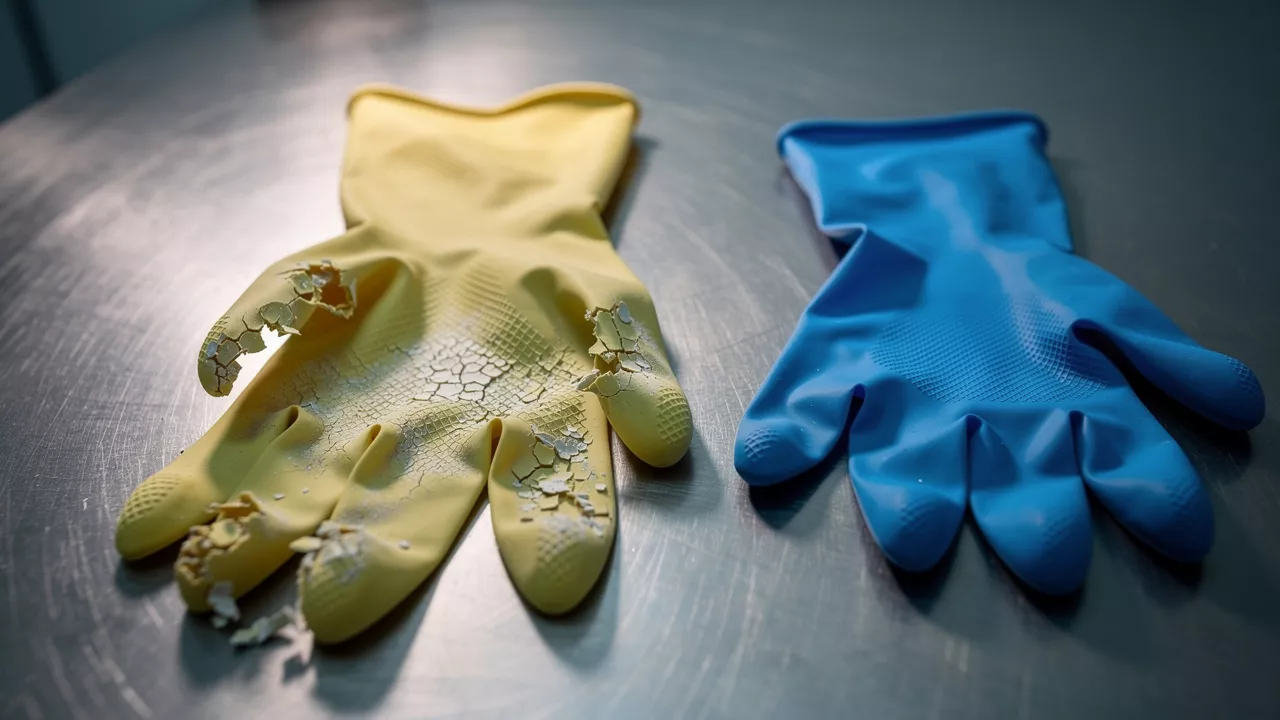
For busy teams, it helps to remember a few simple red flags that mean a glove should never be used, even for low‑risk tasks. These signs show up again and again whenever nitrile gloves expire in real storage rooms.
Yellowing or other discoloration is often the first visible change. When a blue or purple glove no longer matches its usual shade, oxidation and aging are usually underway, and the glove should be treated with suspicion.
Cracks, brittleness, or flaking on the surface show that the material has dried and lost its flexibility. These areas can split wide open during normal use, leaving skin exposed without much warning.
A sticky or tacky feel means the inner chemistry of the nitrile has shifted. Plasticizers and stabilizers may have moved or broken down, and the glove is no longer behaving like a fresh barrier material.
Failure to stretch and return to shape during a gentle test is another clear danger sign. Healthy gloves stretch smoothly, while aged ones may feel rigid, lumpy, or slow to move back.
A strong chemical odor when you open the box tells you that volatile compounds are leaving the glove. This change often goes hand in hand with weaker material and should make you question the whole box.
Any tearing during a simple pull test is a final warning. If a glove cannot survive being gently stretched over your hand, it has no chance of working safely during real tasks, and it should be discarded without argument.
The Real Risks Of Using Expired Nitrile Gloves

Using a glove that has quietly aged past its safe life is not just a minor quality issue. It can put workers, patients, and customers at real risk. When nitrile gloves expire, their failures are often silent and unseen until a problem shows up as an infection, a rash, or a contaminated batch.
For safety managers and procurement staff, the goal is not only to save money by rotating stock. The goal is to make sure that every glove in use still offers the barrier that people expect when they pull it on.
Safety, Health, And Compliance Consequences
Expired gloves can create several serious problems, and research into PPE integrity — including work on scientists measuring microplastics may introduce contamination from degraded materials — underscores how compromised barriers can fail in ways that are not immediately visible:
Weaker barrier protection. As the nitrile matrix changes, it becomes easier for chemicals, oils, and tiny organisms to pass through. This does not always appear as a big hole. Instead, the material becomes more open on a microscopic level, which makes contamination more likely during long tasks or contact with harsh substances.
More tearing and punctures. Old gloves often feel stiff when people put them on, and that stiffness means they are more likely to rip. A small snag on a nail, a corner, or an instrument can open the glove with very little force. Many workers do not notice right away, so they keep handling blood, food, or chemicals with bare skin where nitrile gloves expire in mid‑shift.
Regulatory trouble. In healthcare and regulated food settings, standards from OSHA, the FDA, and similar bodies all expect appropriate, effective, and in‑date personal protective equipment. If an inspection finds that nitrile gloves expire months or years before use, the facility may face citations or worse, especially if an exposure incident has already taken place.
False sense of security. Staff see a glove on their hand and believe they are safe. That belief can lead them to accept tasks with more risk or more contact time, unaware that their main barrier is already compromised. Nitrile Gloves Info often highlights this hidden danger when teaching teams why strict control of dates and storage is worth the extra effort.
“A glove that only looks safe is more dangerous than no glove at all,” one lab manager told Nitrile Gloves Info after tracing a contamination event back to expired stock.
When Should You Never Use Expired Nitrile Gloves
There are some tasks where using an expired glove is never acceptable, no matter how good the glove looks or feels. In these settings, the cost of a single failure is simply too high, and the standard must be fresh, high‑quality PPE every time.
Medical and dental procedures require full barrier protection against blood and body fluids. If nitrile gloves expire before use, they should never be used on patients, even for brief or minor tasks, because the infection risk is too high.
Handling hazardous chemicals, biological agents, or blood‑borne pathogens demands maximum material strength. Degraded gloves may allow faster permeation or sudden tears, putting workers in direct contact with dangerous substances.
Laboratory and research work often involves sharp tools, fragile glass, and concentrated reagents. Here, even a small weakness in the glove wall can lead to cuts, burns, or contamination that affects both safety and test results.
Commercial food preparation and handling connects directly to public health. Old gloves can split while handling raw meat, salads, or ready‑to‑eat products, raising cross‑contamination risks across entire batches.
Any task that needs sterility, such as surgery or some cleanroom work, requires fresh, in‑date gloves. Once nitrile gloves expire, they can no longer be trusted to hold sterility, regardless of how they look.
For very low‑risk home tasks like light cleaning or gardening, some people choose to use old gloves that pass all inspection steps, but even then they should accept that the level of protection may be lower than with a fresh pair. When there is any doubt, a new glove is always the safer choice.
Conclusion
Nitrile gloves are one of the most durable and reliable types of disposable hand protection on the market, but they are not permanent. Over time and with poor storage, nitrile gloves expire and slowly lose the strength, stretch, and tight barrier that make them so valuable in healthcare, food service, salons, and industry.
Across this guide, you have seen that most unopened boxes last around three to five years, and some high‑grade lines can remain usable for close to ten years under ideal conditions. Reaching those numbers depends on three pillars:
Good storage that keeps heat, light, and moisture under control
Regular inspection that catches visible and hidden signs of aging
Firm rules about expiration dates that keep old stock away from high‑risk tasks
The cost of ignoring these steps can show up as infections, chemical exposure, product recalls, or failed audits — and emerging research on Closing the Loop on PPE disposal and polymer recovery further highlights the full lifecycle responsibility that comes with managing glove stock properly. Compared to that, replacing boxes as nitrile gloves expire is a small price to pay. For teams that want deeper help choosing between medical, food, and industrial grades or building solid glove policies, Nitrile Gloves Info offers clear, detailed guidance. A simple next step is to walk your storage areas, check dates, and adjust conditions so that every glove you stock is ready to protect when it counts.
FAQs
How long do unopened nitrile gloves typically last?
Most unopened nitrile gloves stay in good shape for about three to five years from the manufacturing date when they are stored in a cool, dry, dark place. Some premium products, especially medical and industrial grades, can last close to ten years in ideal storage. The printed date on the box is still your main guide, and it should outweigh general rules whenever nitrile gloves expire on paper before these ranges.
Does the color of nitrile gloves, such as black or blue, affect shelf life?
No. Glove color does not change how fast nitrile gloves expire or degrade. The rate of aging comes from the NBR formulation and from storage conditions such as heat, humidity, and light. Colors are mainly for contrast, style, or department coding, not for performance over time.
What should I do with expired, unused nitrile gloves?
Start by inspecting them. If you see cracks, heavy discoloration, stiffness, or tearing during a light stretch test, discard them according to local waste rules. If they still look and feel normal, some people choose to use them only for low‑risk tasks like light cleaning or painting, never for medical, food, or chemical work. For large volumes of stock where nitrile gloves expire at once, Nitrile Gloves Info suggests checking for specialized glove recycling programs, since standard curbside recycling usually does not accept this type of material.