Introduction
A bottle of bleach on the cart, a spray of acidic bathroom cleaner in hand, and a box of blue gloves on the shelf. Many workers pause and wonder whether those thin disposable nitrile gloves really stand up to all these strong cleaners. The relationship between disposable nitrile gloves and pH is not as simple as “safe” or “unsafe.”
Some cleaners are only mildly acidic, like many glass sprays. Others are very alkaline, like oven cleaners or heavy‑duty floor strippers. A few products combine high pH and harsh solvents in the same bottle. Nitrile butadiene rubber, the material in most disposable nitrile gloves, has built‑in resistance to many chemicals, but it is not magic armor.
pH runs from 0 (strongly acidic) to 14 (strongly alkaline). Cleaning products are scattered across this scale, so no single glove style can handle everything.
This article explains how nitrile gloves are tested against chemicals, how they behave with high and low pH cleaners, where they fail, and what factors really matter in day‑to‑day use. By the end, anyone from a nurse to a food plant manager will know when disposable nitrile gloves are enough, when they are not, and how Nitrile Gloves Info helps pick the right glove for the job.
Key Takeaways
Disposable nitrile gloves handle many common acidic and alkaline cleaners well for brief splashes. Protection drops quickly if the glove stays wet or if the chemical is very strong. Gloves should be removed and discarded right after contact to keep skin safe.
Some strong acids, very concentrated bases, and many organic solvents defeat nitrile fast. The same pair of gloves that feels fine with bleach may fail almost instantly with acetone or methanol. Checking chemical data and glove ratings before use prevents these nasty surprises.
Glove thickness, proper fit, and strict single use make a big difference in real protection. Safety Data Sheets (SDS) guide glove choice, and no glove protects against every chemical. A quick risk check before each task helps match the glove to the cleaner.
As many safety trainers like to say, “You can guess your way into an injury, but you can’t guess your way into protection.”
H2 Section 1: How Nitrile Gloves Are Rated Against Chemicals — The Science Behind the Protection
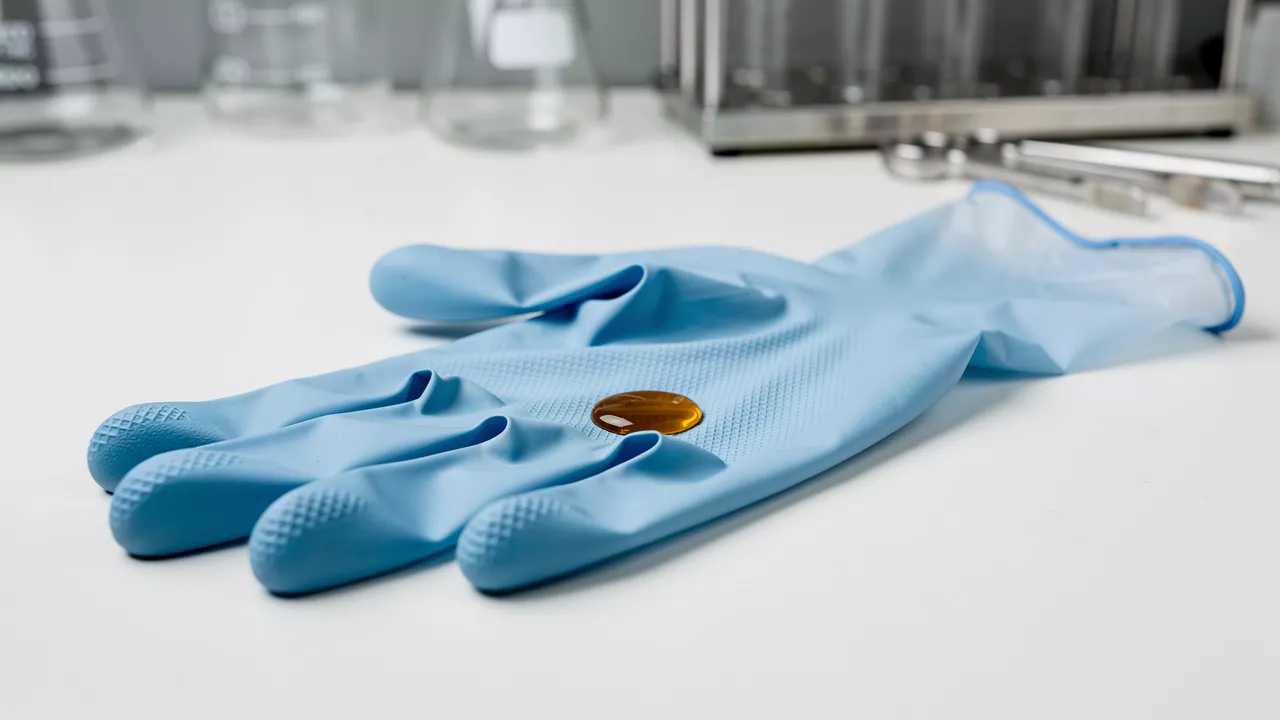
Disposable nitrile gloves are made from nitrile butadiene rubber (NBR), a synthetic mix of butadiene and acrylonitrile. The acrylonitrile part gives the material strong resistance to many oils, fuels, and several common acids and bases. This is why nitrile usually outperforms latex and vinyl when workers handle cleaning chemicals with a wide range of pH.
Glove makers and safety labs rate chemical resistance with three main ideas:
Breakthrough Time
This is how long it takes for a tiny amount of a chemical to show up on the inside of the glove after the outside is exposed. Longer is better. Eight hours or more counts as excellent, while around fifteen minutes is often treated as the minimum for acceptable splash protection.Degradation
This means visible damage to the glove material when it contacts a chemical. A degraded glove may:swell
crack
soften
shrink
It can still look normal at first, though, so workers should never rely only on appearance. A chemical can move through the glove even when it still looks intact.
Permeation Rate
This is the speed at which a chemical travels through the glove once breakthrough starts. In real use, hand motion, stretching, and body heat speed this process compared with quiet lab tests. Thin disposable nitrile gloves, usually four to six mil, are built for short, accidental contact, not soaking.
Once a glove is hit by a hazardous cleaner, it should be removed and thrown away right away — research on The Impact of Disinfecting non-sterile disposable gloves confirms that glove integrity and microbial contamination are closely linked to how gloves are handled after exposure. Keeping contaminated gloves on for “just a bit longer” can quietly push more chemical through the material and onto the skin.
A common safety reminder is, “Personal protective equipment is your last line of defense, not your first.”
H2 Section 2: Nitrile Gloves and pH — What They Protect Against (and What They Don’t)
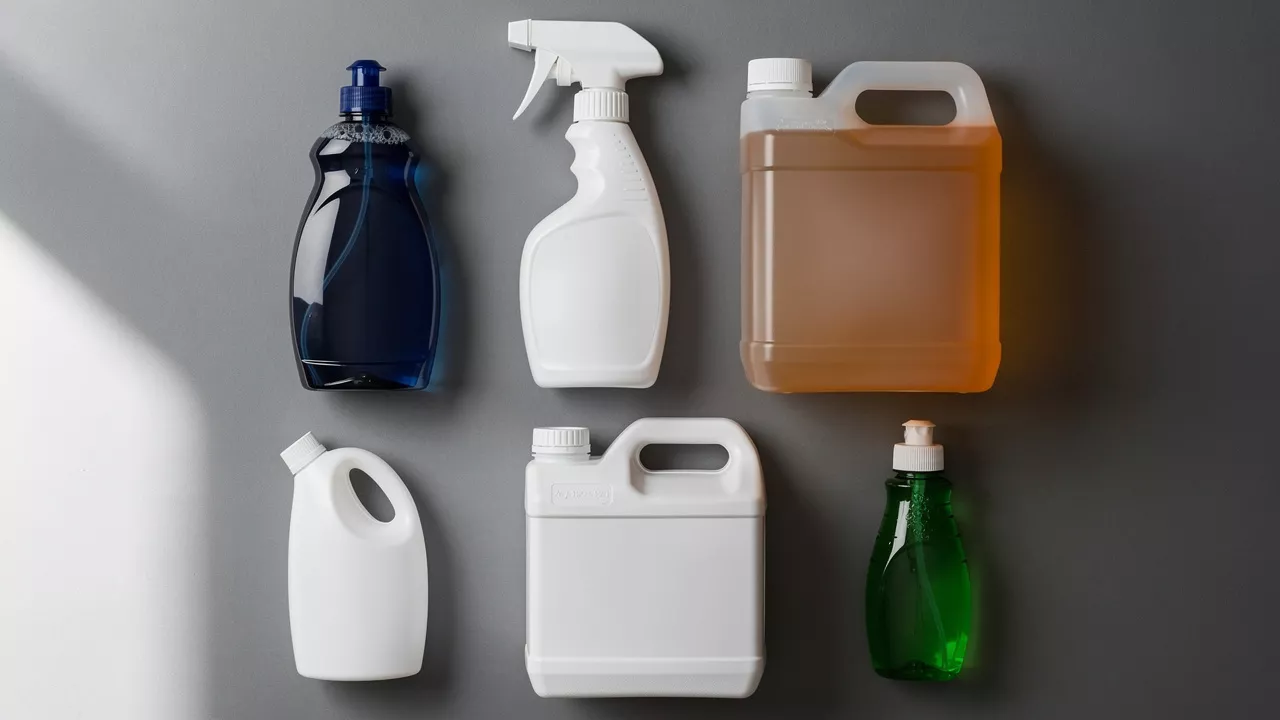
pH tells us how acidic or alkaline a liquid is. Low pH cleaners, like descalers and toilet bowl products, are acidic. High pH cleaners, like bleach, oven cleaners, and some degreasers, are alkaline. When people search about disposable nitrile gloves and pH, they really want to know which of these products are safer to handle with standard gloves and which are more risky.
The table below gives a practical snapshot of how disposable nitrile gloves perform with common cleaning chemicals that sit at different points on the pH scale.
| Category | Cleaning Agent / Chemical | Nitrile Protection Level |
|---|---|---|
| ✅ Good Short-Term Splash Protection | Sodium Hydroxide (found in many caustic cleaners and some bleaches) | Good (about 15 minutes or more for brief splashes) |
| ✅ Good Short-Term Splash Protection | Hydrochloric Acid (descalers, toilet bowl cleaners) | Good (short-term splash) |
| ✅ Good Short-Term Splash Protection | Phosphoric Acid (surface and bathroom cleaners) | Good |
| ✅ Good Short-Term Splash Protection | Potassium Hydroxide (alkaline degreasers) | Good |
| ✅ Good Short-Term Splash Protection | Hydrogen Peroxide up to 30 percent (disinfectants) | Good |
| ✅ Good Short-Term Splash Protection | Acetic Acid (vinegar‑based cleaners) | Good |
| ⚠️ Minimal or No Protection | Methanol (some industrial cleaners and fuels) | Breakthrough in under one minute |
| ⚠️ Minimal or No Protection | Acetone (nail polish removers, some degreasers) | Breakthrough in under one minute |
| ⚠️ Minimal or No Protection | Chloroform or Methylene Chloride (strippers, some specialty products) | Breakthrough in under one minute |
One special case is hydrofluoric acid, sometimes used in heavy industrial cleaning. Even eight‑mil disposable nitrile gloves only offer short splash protection with this acid. Standard four to six mil gloves from most boxes are not enough for that type of work and should be avoided for it.
“Good short‑term splash protection” never means “safe to soak.” It means the glove can handle brief, accidental contact, such as a splash or a quick wipe, when changed right after. Workers should remove and discard the gloves once they are contaminated and wash their hands.
This is why Nitrile Gloves Info highlights thicker, industrial‑grade nitrile options for janitorial teams, labs, and food plants that often deal with tough high or low pH cleaners. Along with glove choice, the chemical’s Safety Data Sheet (SDS) should always be checked, because it lists both the recommended glove material and any limits on contact time.
A line often heard in safety meetings is, “If you don’t have time to read the Safety Data Sheet, you don’t have time to use the chemical.”
H2 Section 3: Key Factors That Affect How Well Nitrile Gloves Protect You
Even when a cleaning product looks “compatible” with nitrile, several real‑world factors change how much protection a worker actually gets. Understanding these factors helps safety managers and front‑line staff get more from every box of gloves.
Glove thickness has a direct impact on protection time. A six‑mil nitrile glove usually resists a given cleaner longer than a four‑mil glove of the same material. For higher‑risk tasks, such as handling concentrated caustics, many workplaces choose thicker industrial gloves from Nitrile Gloves Info. For quick, intense tasks, some teams also use two pairs at once, though this can reduce touch feel and lead to faster hand fatigue.
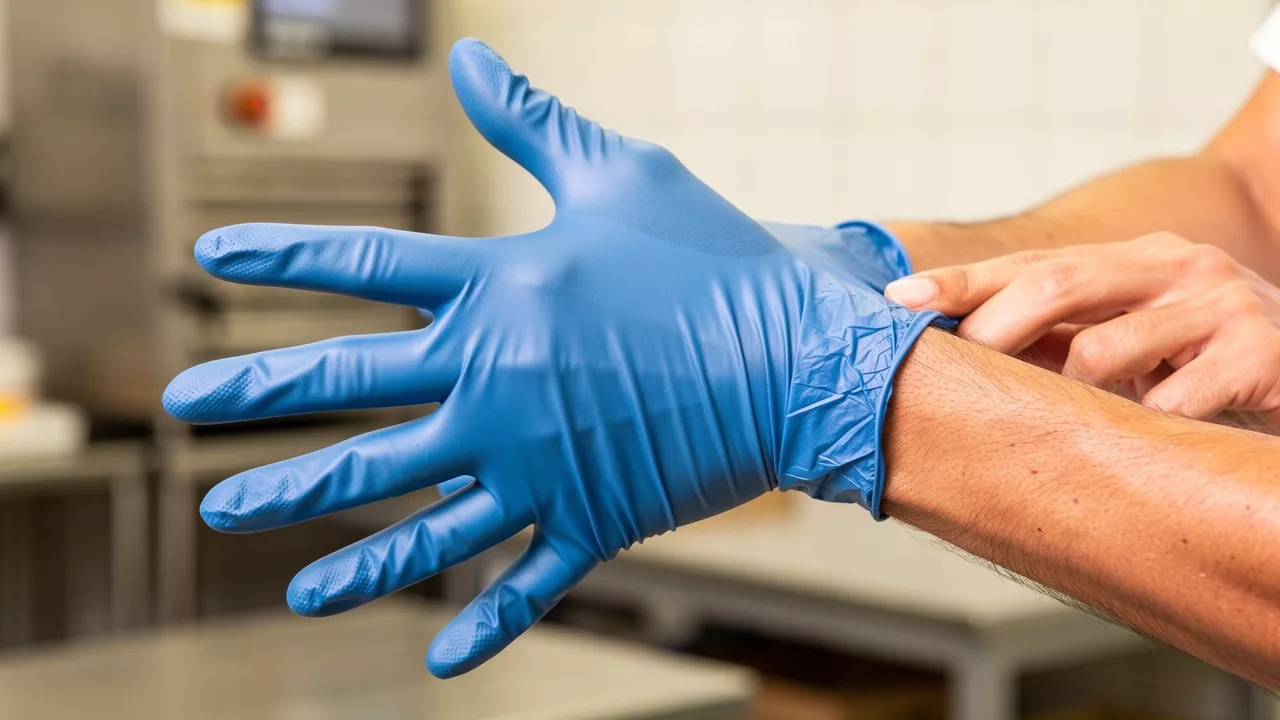
Proper fit keeps the nitrile layer working as designed. When a glove is too tight, it stretches thin and becomes easier for chemicals to pass through and easier to tear. When a glove is too loose, grip and control suffer, and the cuff can catch on equipment. Following the manufacturer’s size chart helps workers find a snug but comfortable fit.
Single‑use discipline keeps exposure lower over a shift. Disposable nitrile gloves are not meant to be washed or reused after contact with harsh cleaners. Each time a worker keeps wearing a contaminated glove, more chemical can move through the material and reach the skin. Building a habit of “one task, one pair” is a simple and very effective safety step.
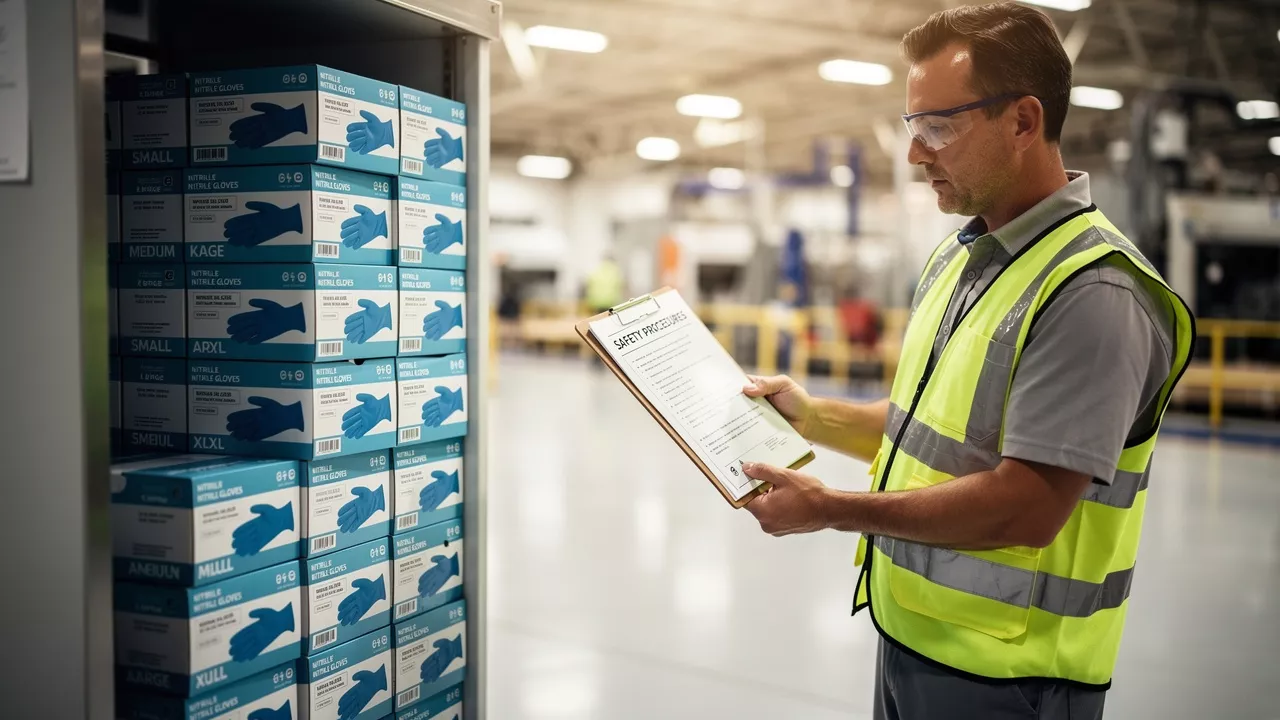
Safety Data Sheets guide the final decision. Every cleaning product, from a hospital disinfectant to a food plant degreaser, has an SDS that lists recommended glove types and any limits on contact time. Making SDS review part of training means decisions about disposable nitrile gloves and pH are based on data, not guesswork.
Correct removal and smart storage keep the glove barrier reliable. Pulling gloves off from the wrist outward helps keep residue off the skin, and hand washing finishes the job. Storing boxes in a cool, dry space away from sunlight or ozone slows aging of the nitrile, so the gloves keep their designed level of protection.
Conclusion
Disposable nitrile gloves give solid short‑term splash protection against many acidic and alkaline cleaners, including common products with sodium hydroxide, hydrochloric acid, and phosphoric acid. They are less effective, or nearly useless, against some strong organic solvents and specialty chemicals, which can break through in less than a minute.
Real safety comes from more than just grabbing any blue glove from the shelf. Thickness, fit, and a strict single‑use policy matter, and the Safety Data Sheet for each cleaner should guide final choices. Nitrile Gloves Info supports this process with clear guidance on medical‑grade and industrial‑grade nitrile options that suit healthcare, food processing, salon work, and industrial cleaning.
The next step is simple:
Review the chemicals used in the workplace.
Check their SDS documents.
Match them with the right nitrile gloves so every task with high or low pH cleaners is handled with confidence.
FAQs
Are nitrile gloves safe to use with bleach-based cleaning products?
Yes, nitrile gloves are generally safe for brief work with bleach, which often contains alkaline sodium hypochlorite. They offer good short‑term splash protection when the gloves are removed and thrown away right after contact. Long soaks or dipping hands in bleach, even with gloves, should be avoided.
Can nitrile gloves handle acidic cleaners like toilet bowl cleaners or descalers?
Most toilet bowl cleaners and descalers use acids such as hydrochloric or phosphoric acid that standard five‑mil nitrile handles fairly well for short tasks. Breakthrough times are usually longer than fifteen minutes for splashes. Very strong or concentrated products can shorten this time, so checking the SDS is always important before choosing gloves.
What cleaning chemicals will immediately break through nitrile gloves?
Chemicals such as methanol, acetone, chloroform, and methylene chloride can pass through thin disposable nitrile in under one minute. These appear in some industrial degreasers, paint strippers, and nail products. For these liquids, workers should switch to gloves made from materials like butyl rubber or other specialty chemical‑resistant styles recommended on the SDS.
How does glove thickness affect protection against pH cleaning agents?
Thicker nitrile gloves, such as six‑mil compared with four‑mil, give more time before acids or bases pass through. This extra thickness is especially helpful for high‑pH caustic cleaners and stronger acids. For very intense but brief exposure, some teams add a second pair of gloves to extend protection while keeping contact time as short as possible.