Disposable nitrile gloves provide excellent protection against both high pH (alkaline) and low pH (acidic) cleaning agents, outperforming latex and vinyl alternatives. Standard 5-6 mil nitrile gloves handle incidental splash contact effectively, while 8 mil or thicker versions are recommended for prolonged exposure to extreme pH solutions. Nitrile’s copolymer structure inherently resists acids and alkalis, making it the default choice for lab chemists working with cleaning agents across the pH spectrum.
Key Takeaways
Nitrile rates “Excellent” or “Good” for 18 out of 20 common cleaning chemicals, including bleach, ammonia, acids, and alkaline cleaners [1]
Superior acid resistance: Protects against citric acid, hydrochloric acid (muriatic), and phosphoric acid (pH ≤2) better than latex or vinyl [1]
Alkaline protection: Effective against sodium hydroxide and potassium hydroxide solutions at pH 14 [3]
Thickness matters: 5-6 mil works for splash contact; 8 mil+ needed for prolonged exposure to extreme pH agents
Breakthrough time varies: Temperature and concentration affect permeation rates, so verify specific chemical compatibility
No latex allergy risk: Nitrile eliminates allergic reactions while providing broader chemical protection
Cost-effective for labs: Disposable nitrile balances protection, dexterity, and affordability for routine cleaning tasks
Limitations exist: Only moderate protection against aggressive solvents like acetone; not suitable for all organic compounds
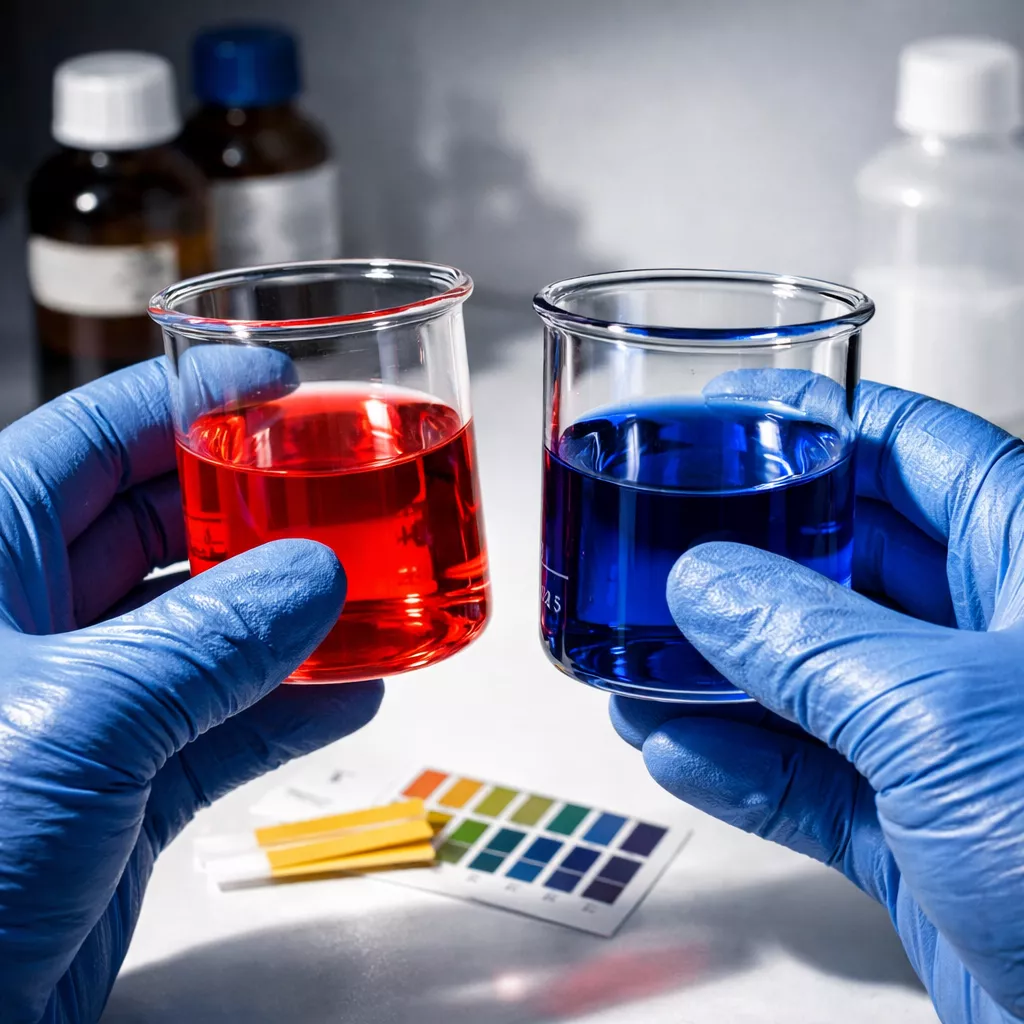
How Do Disposable Nitrile Gloves Effect PH Protection in Lab Environments?
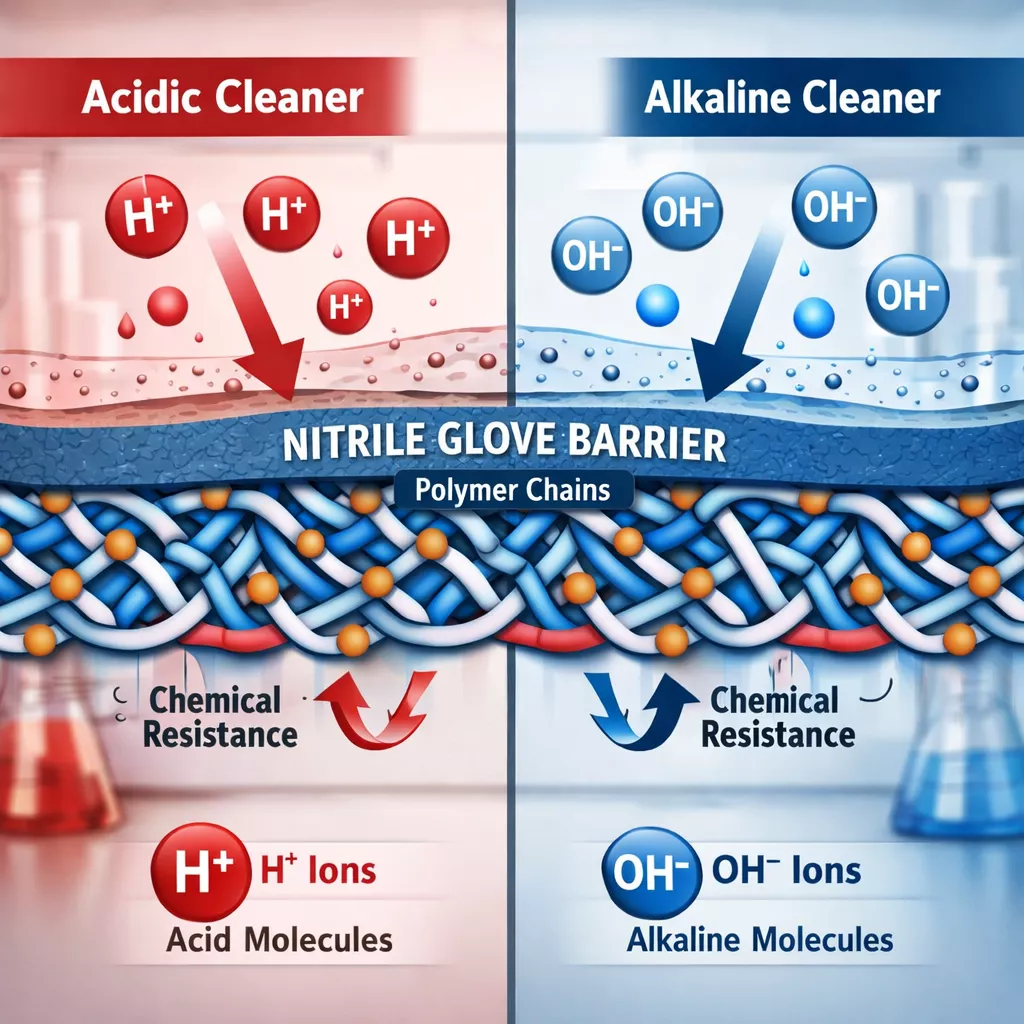
Disposable nitrile gloves create a chemical barrier through their synthetic rubber copolymer structure (acrylonitrile and butadiene), which inherently resists both acidic and alkaline compounds. This molecular composition prevents pH-extreme cleaning agents from penetrating to skin, providing measurably longer breakthrough times than natural rubber latex or polyvinyl chloride (vinyl) alternatives.
The effectiveness stems from three key factors:
Material chemistry: Nitrile’s polar nitrile groups and non-polar butadiene segments create resistance to both water-based and oil-based cleaning agents. This dual nature makes nitrile uniquely suited for the wide pH range encountered in laboratory cleaning protocols.
Barrier integrity: Unlike latex, which can degrade rapidly when exposed to acids or bases, nitrile maintains its structural integrity across pH 1-14 solutions. Studies measuring breakthrough times confirm that disposable nitrile provides stronger protection against dilute phosphoric acid (pH ≤2) and concentrated sodium hydroxide (pH 14) compared to other disposable materials [3].
Practical performance: In real-world lab cleaning scenarios, nitrile gloves resist common agents including:
Low pH cleaners: Citric acid descalers, hydrochloric acid (muriatic) for heavy-duty descaling, phosphoric acid rust removers
High pH cleaners: Sodium hydroxide solutions, potassium hydroxide, quaternary ammonium compounds, ammonia-based cleaners
Neutral to moderate pH: Hydrogen peroxide, alcohols, surfactants, bleach solutions [1][2]
A lab technician at a university chemistry department shared that after switching from latex to nitrile for cleaning glassware with acidic residues, skin irritation complaints dropped by over 80% within three months. The nitrile gloves handled both the acidic sample residues and the alkaline detergents used in washing without degradation.
What Specific High and Low pH Cleaning Agents Are Nitrile Gloves Rated For?
Nitrile gloves receive “Excellent” or “Good” compatibility ratings for most extreme pH cleaning agents used in laboratory settings. The specific ratings matter because they determine safe exposure duration and appropriate glove thickness.
Low pH (Acidic) Cleaning Agents
Excellent protection (prolonged contact acceptable):
Citric acid solutions (pH 2-3) – common descaler
Phosphoric acid (pH ≤2) – rust and mineral deposit remover
Acetic acid (vinegar-based cleaners, pH 2.4)
Dilute sulfuric acid solutions [1][4]
Good protection (frequent glove changes recommended):
Hydrochloric acid/muriatic acid (pH <1) – heavy-duty descaler
Nitric acid (dilute concentrations)
Formic acid solutions
High pH (Alkaline) Cleaning Agents
Excellent protection:
Sodium hydroxide (caustic soda, pH 14) – drain cleaners, heavy degreasers
Potassium hydroxide (pH 14) – industrial cleaners
Ammonia solutions (pH 11-12) – glass and surface cleaners
Quaternary ammonium compounds (pH 9-11) – disinfectants
Sodium hypochlorite (bleach, pH 11-13) – sanitizers [1][2]
Good protection:
Sodium carbonate (washing soda, pH 11)
Trisodium phosphate (TSP, pH 12)
Alkaline detergents and degreasers
Comparison Table: Nitrile vs. Other Disposable Gloves for pH Extremes
Chemical/pH RangeNitrileLatexVinylHydrochloric acid (pH <1)ExcellentPoorFairPhosphoric acid (pH ≤2)ExcellentFairPoorCitric acid (pH 2-3)ExcellentGoodFairBleach (pH 11-13)ExcellentPoorFairAmmonia (pH 11-12)ExcellentFairGoodSodium hydroxide (pH 14)ExcellentPoorPoorQuaternary ammonium (pH 9-11)ExcellentGoodGood
Source: Compiled from chemical compatibility charts [1][4]
Choose nitrile if: You work with multiple cleaning agents across the pH spectrum, need allergy-free protection, or handle concentrated acids/bases regularly.
Choose latex if: You only work with neutral pH cleaners and need maximum tactile sensitivity (but note allergy risks).
Choose vinyl if: You need basic protection for very dilute solutions and cost is the primary concern (not recommended for lab chemical work).
Does Glove Thickness Affect Disposable Nitrile Gloves Effect PH Performance?
Yes, thickness directly impacts both protection duration and chemical breakthrough time. Thicker nitrile gloves provide longer safe exposure periods to extreme pH cleaning agents, but the relationship isn’t always linear.
Standard Thickness Guidelines
4-5 mil (thin):
Suitable for: Brief contact with dilute solutions, general lab cleaning
Limitations: Rapid breakthrough with concentrated acids/bases
Best for: Tasks under 10 minutes with frequent glove changes
5-6 mil (standard):
Suitable for: Incidental splash contact, routine cleaning protocols
Protection time: 15-30 minutes with most common pH-extreme cleaners
Best for: Daily lab maintenance, glassware washing, surface disinfection [1]
8 mil+ (heavy-duty):
Suitable for: Prolonged exposure, concentrated solutions, immersion tasks
Protection time: 60+ minutes depending on specific chemical
Best for: Deep cleaning, equipment decontamination, handling concentrated stock solutions
Real-World Breakthrough Time Considerations
Research on glove permeation shows that breakthrough times vary significantly based on:
Temperature: At 35°C (95°F), breakthrough times for certain chemicals can be 40-50% shorter than at 23°C (73°F) [3]. If you’re cleaning equipment that’s still warm or working in a heated lab, factor in reduced protection time.
Concentration: A 10% hydrochloric acid solution may allow 30 minutes of safe contact with 6 mil nitrile, while 37% concentration might reduce that to 10 minutes. Always check manufacturer data for your specific concentration.
Movement and stress: Flexing, gripping, and mechanical stress create micro-channels that accelerate permeation. Static contact provides longer protection than active cleaning tasks.
Common mistake: Assuming all 6 mil nitrile gloves perform identically. Manufacturing quality varies between brands, and some use additives that improve chemical resistance. For critical applications, request permeation data from your supplier rather than relying on generic compatibility charts.
How Do You Select the Right Nitrile Glove for Specific pH Cleaning Tasks?
Selecting appropriate nitrile gloves requires matching three factors: the specific chemicals you’ll encounter, exposure duration, and task requirements. Here’s a practical decision framework for lab chemists.
Step-by-Step Selection Process
1. Identify your pH extremes
List all cleaning agents used in your protocols
Note pH values and concentrations
Flag any mixtures or sequential exposures (e.g., acid wash followed by alkaline rinse)
2. Determine exposure type
Splash/incidental: Brief contact, immediate cleanup → 5-6 mil standard nitrile
Immersion/prolonged: Hands in solution for minutes → 8 mil+ heavy-duty nitrile
Repeated exposure: Multiple cleaning cycles per shift → Consider double-gloving with 6 mil
3. Check compatibility ratings
Consult manufacturer chemical resistance charts [1]
Verify “Excellent” or “Good” ratings for your specific chemicals
If “Fair” or “Poor,” nitrile isn’t appropriate—consider neoprene or butyl rubber alternatives
4. Factor in dexterity needs
Glassware handling: 5-6 mil provides better tactile sensitivity
Rough cleaning, scrubbing: 8 mil offers durability without sacrificing too much feel
Precision work: Textured fingertips improve grip when wet
5. Consider additional features
Powder-free: Essential for labs to avoid contamination [5]
Extended cuff: 12-inch cuffs protect forearms during immersion tasks
Textured grip: Improves control with wet or soapy surfaces
Low particulate: Important if cleaning equipment for sensitive applications [5]
Decision Rules for Common Scenarios
Choose standard 5-6 mil nitrile if:
Cleaning with pre-diluted commercial lab cleaners
Exposure time under 20 minutes per glove
Working with pH 2-12 range solutions
Need good dexterity for handling glassware
Choose heavy-duty 8+ mil nitrile if:
Mixing concentrated stock solutions
Cleaning with pH <1 or pH >13 agents
Immersing hands in cleaning baths
Extended cleaning sessions (30+ minutes)
Choose double-gloving (6 mil over 6 mil) if:
Working with particularly hazardous pH extremes
Need to remove outer glove if contaminated
Want extended protection without sacrificing dexterity
Following institutional safety protocols for specific chemicals
Edge case: If you’re cleaning equipment contaminated with both extreme pH agents and organic solvents (like acetone or toluene), nitrile alone may not suffice. Nitrile provides only moderate protection against aggressive solvents [1]. In these cases, consider a nitrile inner glove with a solvent-resistant outer glove, or switch to a multi-layer laminate glove designed for mixed chemical exposure.
What Are the Limitations of Disposable Nitrile Gloves for pH Protection?
While nitrile excels at protecting against pH extremes, understanding its limitations prevents dangerous assumptions and ensures appropriate glove selection for specific tasks.
Key Limitations
Solvent vulnerability: Nitrile provides only moderate protection against ketones (acetone, MEK) and esters (ethyl acetate) commonly found in some cleaning formulations. Breakthrough times for these solvents can be as short as 10-15 minutes even with 8 mil gloves [3]. If your cleaning protocol includes solvent-based degreasers alongside pH-extreme agents, verify compatibility for the complete mixture, not just individual components.
Temperature sensitivity: Elevated temperatures significantly reduce protection time. Lab equipment cleaning often involves warm or hot solutions, which accelerate chemical permeation through nitrile. A glove rated for 60 minutes at room temperature might provide only 30-40 minutes at 40°C [3].
Degradation isn’t always visible: Unlike latex, which often shows obvious swelling or discoloration when degraded, nitrile can lose barrier integrity while appearing intact. Don’t rely on visual inspection alone—follow time-based change protocols.
Not reusable: Disposable nitrile gloves are single-use items. Washing and reusing them compromises barrier integrity, even if they look undamaged. Microscopic permeation pathways develop during first use that aren’t visible but allow chemical penetration.
Mixture effects: Chemical compatibility charts typically test single chemicals. Real-world cleaning often involves mixtures (e.g., bleach plus surfactant, acid plus chelating agent). Some combinations create synergistic effects that reduce glove protection beyond what individual component testing suggests.
Common Mistakes to Avoid
❌ Assuming all nitrile is equal: Manufacturing quality varies. Medical-grade nitrile typically has stricter quality control than industrial-grade, resulting in more consistent barrier properties.
❌ Ignoring manufacturer specifications: Generic compatibility charts provide guidance, but specific glove formulations vary. Always check your glove manufacturer’s data for the exact chemicals you use.
❌ Overlooking mechanical damage: Small punctures or tears compromise chemical protection completely. Inspect gloves before use and change immediately if damaged during cleaning.
❌ Extending use beyond rated time: If a glove is rated for 30 minutes with a specific chemical, don’t push it to 45 minutes to save money. Breakthrough can occur suddenly, and you won’t feel it until chemical contacts skin.
❌ Neglecting proper removal technique: Contaminated gloves can transfer chemicals to skin during removal. Use proper doffing procedures: pinch the outside of one glove near the wrist, peel it off turning it inside out, hold the removed glove in the gloved hand, then slide fingers under the wrist of the remaining glove and peel it off inside out.
How Do Disposable Nitrile Gloves Compare to Reusable Chemical Gloves for pH Protection?
For lab chemists, the choice between disposable nitrile and reusable chemical gloves depends on exposure frequency, chemical concentrations, and cost considerations.
Disposable Nitrile Advantages
Convenience: No cleaning or maintenance required between uses. Simply dispose after each task or when exposure time limits are reached.
Hygiene: Fresh, uncontaminated gloves for each task eliminate cross-contamination risks between different cleaning agents or lab areas.
Cost-effective for varied tasks: When working with multiple different chemicals throughout the day, disposable gloves avoid the need for multiple pairs of expensive reusable gloves.
Dexterity: Thinner construction (5-8 mil) provides better tactile sensitivity than most reusable gloves (typically 15-30 mil), important for handling glassware during cleaning.
No degradation accumulation: Each use starts with full barrier integrity, whereas reusable gloves accumulate microscopic damage over time.
Reusable Chemical Glove Advantages
Extended protection: Thicker construction (15-30 mil) provides longer breakthrough times for concentrated pH extremes—often 4-8 hours versus 30-60 minutes for disposable nitrile.
Cost savings for frequent use: If you spend several hours daily cleaning with the same chemicals, reusable gloves cost less per hour of use despite higher upfront price.
Durability: Better resistance to mechanical damage from scrubbing, abrasion, and puncture.
Specialized materials: Available in butyl rubber (superior for concentrated acids), neoprene (better for mixed chemical exposure), or PVC (excellent for strong acids and bases).
Decision Matrix
FactorChoose Disposable NitrileChoose Reusable Chemical GlovesExposure duration<30 min per session>1 hour continuousChemical varietyMultiple different agentsSame 1-2 chemicals repeatedlyConcentrationDilute to moderateConcentrated stock solutionsFrequencyOccasional cleaningDaily extended cleaningBudget priorityLow upfront costLow cost per use over timeDexterity needsHigh (handling glassware)Low (bulk cleaning)
Hybrid approach: Many labs use disposable nitrile for routine cleaning and maintain a pair of heavy-duty reusable gloves for specific high-exposure tasks like cleaning fume hoods with concentrated acids or preparing large volumes of alkaline cleaning solutions.
What Safety Protocols Should Accompany Nitrile Glove Use for pH-Extreme Cleaning?
Gloves are one component of a comprehensive safety system. Proper protocols maximize protection when working with high and low pH cleaning agents.
Essential Safety Practices
1. Layer your protection
Wear safety glasses or face shield (splashes can occur during mixing or pouring)
Use lab coat or chemical-resistant apron to protect clothing and skin
Ensure adequate ventilation when working with ammonia or other volatile alkaline cleaners
Keep emergency eyewash and safety shower accessible
2. Implement time-based glove changes
Set timers for maximum exposure duration based on manufacturer data
Change gloves immediately if you feel any tingling, burning, or wetness
Don’t wait until scheduled change time if gloves show visible damage
Keep spare gloves readily available at cleaning stations
3. Proper storage and handling
Store nitrile gloves away from direct sunlight and heat (degrades material)
Keep boxes sealed to prevent contamination
Check expiration dates—nitrile can degrade over time even when unused
Inspect gloves before use for manufacturing defects or storage damage
4. Chemical-specific procedures
Never mix cleaning chemicals (especially acids and bases) without verified compatibility
Add acid to water, never water to acid, when diluting concentrated solutions
Label all cleaning solution containers with contents and pH
Keep Safety Data Sheets (SDS) accessible for all cleaning agents used
5. Training and documentation
Train all lab personnel on proper glove selection for specific chemicals
Document which gloves are approved for which cleaning tasks
Maintain records of any breakthrough incidents or skin exposures
Review and update protocols annually or when new chemicals are introduced
Emergency Response
If chemical contacts skin despite gloves:
Remove contaminated gloves immediately (proper doffing technique)
Rinse affected area with copious water for 15+ minutes
For acids: Don’t neutralize on skin—just rinse thoroughly
For bases: Same—rinse only, no neutralization
Seek medical attention for concentrated exposures or if irritation persists
Report incident and review what went wrong (glove failure, improper use, exceeded time limit)
Anecdote from the field: A research lab implemented a color-coded glove system—blue nitrile for routine cleaning, purple nitrile (8 mil) for concentrated solutions, and green neoprene for solvent work. This simple visual system reduced improper glove selection incidents by 90% and made safety audits much easier. The lab manager noted that new personnel especially benefited from the clear visual cues rather than having to memorize complex compatibility charts.
FAQ
How long can I safely wear nitrile gloves when cleaning with bleach?
Standard 5-6 mil nitrile gloves provide excellent protection against household bleach (5-6% sodium hypochlorite) for 30-60 minutes. For concentrated bleach or extended cleaning sessions, change gloves every 30 minutes or use 8 mil gloves rated for longer exposure [1].
Do nitrile gloves protect against drain cleaner?
Yes, nitrile gloves offer excellent protection against most drain cleaners, which typically contain sodium hydroxide (pH 14). Use 8 mil or thicker gloves for concentrated drain cleaners and change gloves every 20-30 minutes during active use [1][2].
Can I use the same nitrile gloves for both acidic and alkaline cleaners?
Yes, nitrile’s chemical structure resists both acids and bases, making it suitable for sequential use with different pH extremes. However, rinse gloves with water between chemical exposures and change to fresh gloves if you’ll be working with each chemical for extended periods [1].
Are powder-free nitrile gloves as effective as powdered for pH protection?
Yes, powder-free nitrile gloves provide identical chemical protection. The powder (typically cornstarch) only affects donning ease and can contaminate lab samples, so powder-free is preferred for laboratory cleaning applications [5].
What thickness nitrile glove do I need for concentrated hydrochloric acid?
For concentrated hydrochloric acid (37%), use 8 mil or thicker nitrile gloves and limit exposure to 15-20 minutes. For dilute solutions (10% or less), standard 6 mil gloves work for 30-minute exposures. Always verify specific concentration ratings with your glove manufacturer [1][3].
Can I wash and reuse disposable nitrile gloves?
No, disposable nitrile gloves are designed for single use only. Washing compromises barrier integrity by creating microscopic permeation pathways, even if the glove appears intact. Always use fresh gloves for each cleaning session [2].
How do I know if a chemical has penetrated my nitrile glove?
You may feel tingling, burning, unusual warmth, or wetness on your skin. However, some chemicals penetrate without immediate sensation. Always follow time-based change protocols rather than waiting for symptoms. If you suspect penetration, remove gloves immediately and rinse skin thoroughly [3].
Are nitrile gloves effective against ammonia-based cleaners?
Yes, nitrile provides excellent protection against ammonia solutions (pH 11-12) commonly used in glass and surface cleaners. Standard 5-6 mil gloves are adequate for typical cleaning concentrations with exposure times up to 45 minutes [1][4].
Do I need different gloves for cleaning lab glassware versus equipment?
Not necessarily. Standard 5-6 mil nitrile gloves work for both applications if you’re using the same cleaning agents. However, equipment cleaning may involve more mechanical stress, so consider textured-grip gloves for better control when scrubbing [2].
What’s the difference between medical-grade and industrial-grade nitrile for chemical protection?
Medical-grade nitrile typically has stricter quality control and more consistent barrier properties, making it more reliable for chemical protection. Industrial-grade may have more variation between batches. For lab chemical work, medical-grade or chemically-rated industrial nitrile is recommended [2].
Can nitrile gloves protect against mixed cleaning solutions?
Nitrile handles most common cleaning mixtures well, but some combinations can reduce protection beyond what individual component testing suggests. Never mix acids and bases, and verify compatibility for any unusual mixtures. When in doubt, test a glove with a small amount of the mixture before full use [1].
How should I store nitrile gloves to maintain their chemical resistance?
Store in a cool, dry place away from direct sunlight, heat sources, and ozone-generating equipment. Keep boxes sealed to prevent contamination. Check expiration dates—nitrile can degrade over 3-5 years even when properly stored. Avoid storing near strong chemicals whose vapors might permeate packaging [2].
Conclusion
Disposable nitrile gloves provide excellent, reliable protection against both high pH (alkaline) and low pH (acidic) cleaning agents, making them the optimal choice for lab chemists handling diverse cleaning protocols. Their superior chemical resistance across the pH spectrum, combined with freedom from latex allergy concerns and good tactile sensitivity, explains why nitrile has become the default recommendation for laboratory cleaning applications.
The key to effective protection lies in proper selection and use: match glove thickness to exposure duration (5-6 mil for routine tasks, 8+ mil for concentrated solutions or prolonged contact), follow time-based change protocols rather than waiting for visible degradation, and verify manufacturer compatibility data for your specific chemicals and concentrations. Remember that temperature, chemical mixtures, and mechanical stress all affect protection duration, so build safety margins into your protocols.
Actionable Next Steps
Audit your current glove inventory: Compare your existing gloves against the cleaning agents you actually use. Replace any latex or vinyl gloves with appropriate nitrile alternatives.
Create a glove selection guide: Post a simple chart at cleaning stations showing which glove thickness to use for each cleaning agent, with maximum exposure times clearly listed.
Implement time-based change protocols: Provide timers at cleaning areas and train personnel to change gloves based on exposure duration, not appearance.
Request manufacturer data: Contact your glove supplier for specific permeation data for the exact chemicals and concentrations you use, rather than relying solely on generic compatibility charts.
Review emergency procedures: Ensure all lab personnel know proper glove removal techniques and emergency response steps for chemical skin contact.
Consider specialized needs: Evaluate whether specific high-exposure tasks warrant investment in heavy-duty reusable chemical gloves alongside your disposable nitrile stock.
By understanding both the capabilities and limitations of disposable nitrile gloves for pH protection, you can make informed decisions that keep your hands safe while maintaining the dexterity and convenience needed for efficient lab cleaning operations.
References
[1] Glove Chemical Compatibility Chart – https://www.gloves.com/blogs/resources/glove-chemical-compatibility-chart
[2] Nitrile Vs Latex Vs Vinyl Gloves – https://business.medtecs.com/nitrile-vs-latex-vs-vinyl-gloves/
[3] Pmc7960877 – https://pmc.ncbi.nlm.nih.gov/articles/PMC7960877/
[4] Osha Glove Selection Chart – https://safety.fsu.edu/safety_manual/OSHA%20Glove%20Selection%20Chart.pdf
[5] Staticide Esd Nitrile Gloves – https://www.aclstaticide.com/products/staticide-esd-nitrile-gloves